Ashtamgam Ayurveda Chikitsalayam & Vidyapeedham Palakkad
Department of Shalakyatanta
Department Introduction – Shalakya Tantra
At Ashtamgam, the Department of Shalakya Tantra is dedicated to the care of diseases affecting the Urdhva Jatru —the region above the clavicle, including the eyes, ears, nose, throat, and oral cavity. Rooted in classical Ayurvedic wisdom, Shalakya Tantra views these organs not as isolated systems but as delicate extensions of the body’s internal balance, closely linked to Doshas, Dhatus, and Manas (mind).
The department, with its team of doctors, stays rooted to the legacy of Ashtamgam and provides the most authentic treatment ever known, in the field of Ayurveda. We provide quality treatment in improving vision in diseases like Refractive errors, Dry eye, conjunctivitis, inflammatory eye diseases like uveitis, Optic neuritis, Corneal opacities, and preventing progression of diseases like Diabetic retinopathy, Retinitis Pigmentosa, Age related macular diseases and Optic atrophy. Among ENT disorders, we are successfully treating Allergic diseases like allergic rhinitis, sinusitis, migraine, tonsillitis, adenoid hypertrophy, Deviated nasal septum and Hearing loss, scalp disorders.
In the academic front, the students are moulded to become doctors with the best clinical and academic expertise.
VISION & MISSION
To mould the next generation of doctors with quality and value based Ayurvedic medical education along with a research-oriented approach to obtain optimum skill in the field of Shalakya Tantra and provide the best patient care.
The department has all the facilities to maintain the Academic standards. The department is well furnished with a full-fledged department library, models, charts, instruments and specimen. Training facilities in Kriyakramas, Sashtra & Anusashtra Karmas with well-equipped OPDs, OT and IPD facilities and advanced investigation techniques.
Facilities Available: –
Department room
Faculty cabin
Departmental library
Kriyakalpa Room
Separate Eye & ENT OPD s
Shalakya OT
Eye exercise unit
ENT diagnostic mini endoscopy
Kriyakalpa
Kriyakalpas Performed: –
Seka
Aschyotana
Pindi
Bidalaka
Tarpana
Putapka
Anjana
Para surgical procedures
Agnikarma
Ksharakarma
Jaloukavacharana
ENT Kriyakalpas
Karnadhoopana
Karnamoola lepa
Karnapooranam
Nasya Karma
Nasa pichu
Nasa lepa
Nasavarthi
Gandoosha
Kabala
CLINICAL EVENTS & ACTIVITIES
Sukha saishavam programme: A Joint venture along with the department of Kaumarabhritya, and in association with Sree Maharshi Vidyalaya, Nhangattari. Started in the year 2018, with a vision to render our service for the general health check-up of the students. The students are given routine Eye & ENT check-up, every Friday
Awareness classes and free Eye check-up are conducted in our hospital as a part of world glaucoma week.
Free ENT check-up is conducted on the occasion of World Hearing Day.
An awareness class and free eye check-up was conducted on the occasion of World Sight Day at Govt High School, Nagalassery. The department extended this venture to provide its service for routine Eye Check-up for the students, every Thursday.
Various medicines are prepared under the supervision of expert’s doctors.
We have a well-functioning Eye Exercise Unit attached to our department.
KRIYA KALPA THERAPY/ ROOM
A well-equipped kriyakalpa room, with well-trained therapists are also a laudable asset of the department. The different kriyakalpas like seka, aschyotana, pindi, bidalaka tarpana, putapaka, anjana, nasya, sirolepa, mukhalepa, karnadhoopana, etc are routinely done, under the guidance and supervision of the consulting doctors.
CONDITIONS TREATED
At Ashtamgam, the Department of Shalakya Tantra addresses a wide spectrum of ENT, eye, and oral conditions through holistic Ayurvedic care.
Ayurvedic Condition | Modern Medical Name | Brief Description |
Abhishyanda | Conjunctivitis | Redness, discharge, and irritation of the eyes. |
Timira | Refractive Errors / Early Vision Loss | Blurring of vision in childrens & Adults and progressive visual impairment. |
Arma | Pterygium | Fleshy growth over the conjunctiva affecting vision. |
Karnasrava | Chronic Suppurative Otitis Media | Ear discharge and infection. |
Badhirya | Hearing Loss | Partial or complete loss of hearing ability. |
Karnanada | Tinnitus | Ringing of Ears |
Pratishyaya | Rhinitis / Sinusitis | Nasal congestion, discharge, and sinus inflammation. |
Peenasa | Chronic Sinusitis | Persistent nasal blockage and headache. |
Nasanaham | Deviated Nasal Septum | Deviated Nasal septum |
Mukhapaka | Stomatitis / Oral Ulcers | Painful ulcers in the oral cavity. |
Danta Harsha | Tooth Sensitivity | Pain or discomfort in teeth due to stimuli. |
Gala Roga (e.g., Tundikeri) | Tonsillitis | Inflammation and infection of tonsils. |
Bhrama | Vertigo/BPPV/Meniers disease | Dizziness |
Adhimantha | Open angle Glaucoma | Watering, redness, pain in the eyes |
Parimlayi Timira | Diabetic Retinopathy | Blurring of Vision |
Palitya, keshashata,Darunaka, Indralupta | Hair & Scalp Disorders | Hairfall, Greying of Hairs, Dandruff, Patchy hairloss |
FACULTY PROFILE
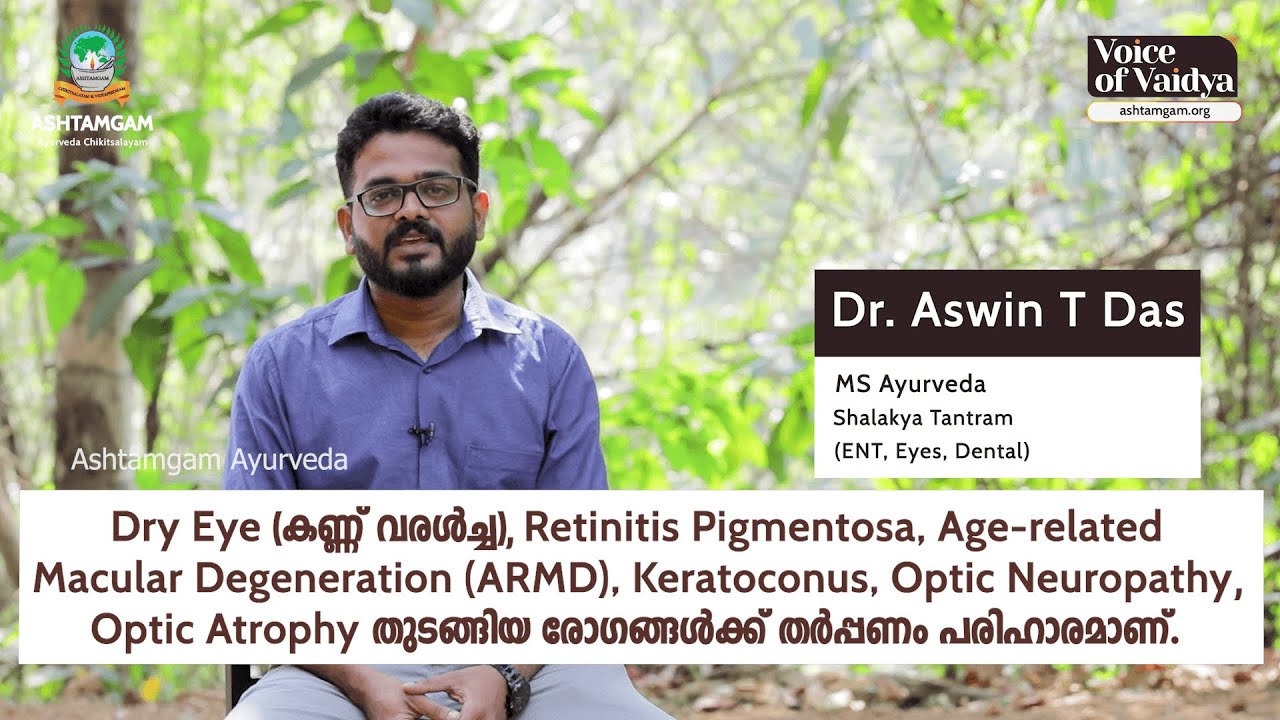
Dr. ASWIN.T. DAS, MS(AY), PGDY- ASSOCIATE PROFESSOR & HOD
Dr. SABARINATH M K, MS(AY)- ASSISTANT PROFESSOR
Dr. SHILPA S, MS(AY)- ASSISTANT PROFESSOR
Frequently Asked Questions (FAQ)
- How long does a typical treatment protocol take?
At Ashtamgam, treatment duration depends on the condition, its chronicity, and individual constitution (Prakriti). Acute conditions may respond within 7–14 days, while chronic disorders like sinusitis or vision-related issues may require structured therapy over 3–6 weeks, including follow-up care. - Are there specific dietary restrictions (Pathya) during treatment?
Yes. Diet plays a crucial role in healing. Ashtamgam provides individualized Pathya-Apathya (dietary guidelines), which may include avoiding cold, oily, fermented, or allergenic foods, and encouraging easily digestible, warm, and Dosha-balancing meals. - Can Ayurvedic treatments be taken alongside Allopathic medications?
In many cases, Ayurvedic therapies at Ashtamgam can be safely integrated with ongoing allopathic treatments. However, this is always done under strict medical supervision to avoid interactions and ensure optimal outcomes. - Is inpatient (IPD) care required, or can treatment be done on an outpatient (OPD) basis?
Most Shalakya procedures, such as Nasya or Karna Purana, are performed on an OPD basis. However, certain conditions requiring intensive therapies may benefit from short-term IPD care for better monitoring and results. - Are the procedures painful or uncomfortable?
Most therapies are non-invasive and soothing. Procedures like Netra Tarpana and Shirodhara are often deeply relaxing. Minimal discomfort, if any, is temporary and well-managed by trained professionals. - Is Ayurveda effective for chronic ENT and eye conditions?
Ayurveda focuses on addressing the root cause. At Ashtamgam, chronic conditions such as sinusitis, dry eye, or recurrent infections are managed through a combination of detoxification, rejuvenation, and lifestyle correction, often leading to sustainable improvement.




![[MAL] നേത്ര തർപ്പണം- കുട്ടികളിലെ കാഴ്ച കുറവിന് | നിങ്ങൾക്കും ഡോക്ടറോട് ചോദിക്കാം - LIVE](https://img.youtube.com/vi/3DUgK2zNZLQ/maxresdefault.jpg)
![[MAL] കണ്ണുകൾക്ക് വേണ്ട വിശ്രമം-Dr Aswin-Ashtamgam Ayurveda](https://img.youtube.com/vi/lPAUWrscbH4/maxresdefault.jpg)
![[MAL] Dry Eye ശ്രദ്ധിക്കേണ്ട കാര്യങ്ങൾ | Ashtamgam Ayurveda](https://img.youtube.com/vi/5eIyjXa4rec/maxresdefault.jpg)

![[MAL] World Sight Day 2021](https://img.youtube.com/vi/mehci6rHirQ/maxresdefault.jpg)